The Call That Comes In Every July
One Fountain City homeowner phoned us on a Saturday afternoon, panicked because her dining room ceiling was bulging like a water balloon. Her air handler sat in the attic directly above. When our tech arrived 47 minutes later, he found the primary condensate line clogged with algae sludge, the secondary pan overflowing, and roughly three square feet of drywall sagging. No float switch had been installed when the unit went in back in 2014. Total water released over the cooling cycle, based on the saturation pattern, was close to 18 gallons.
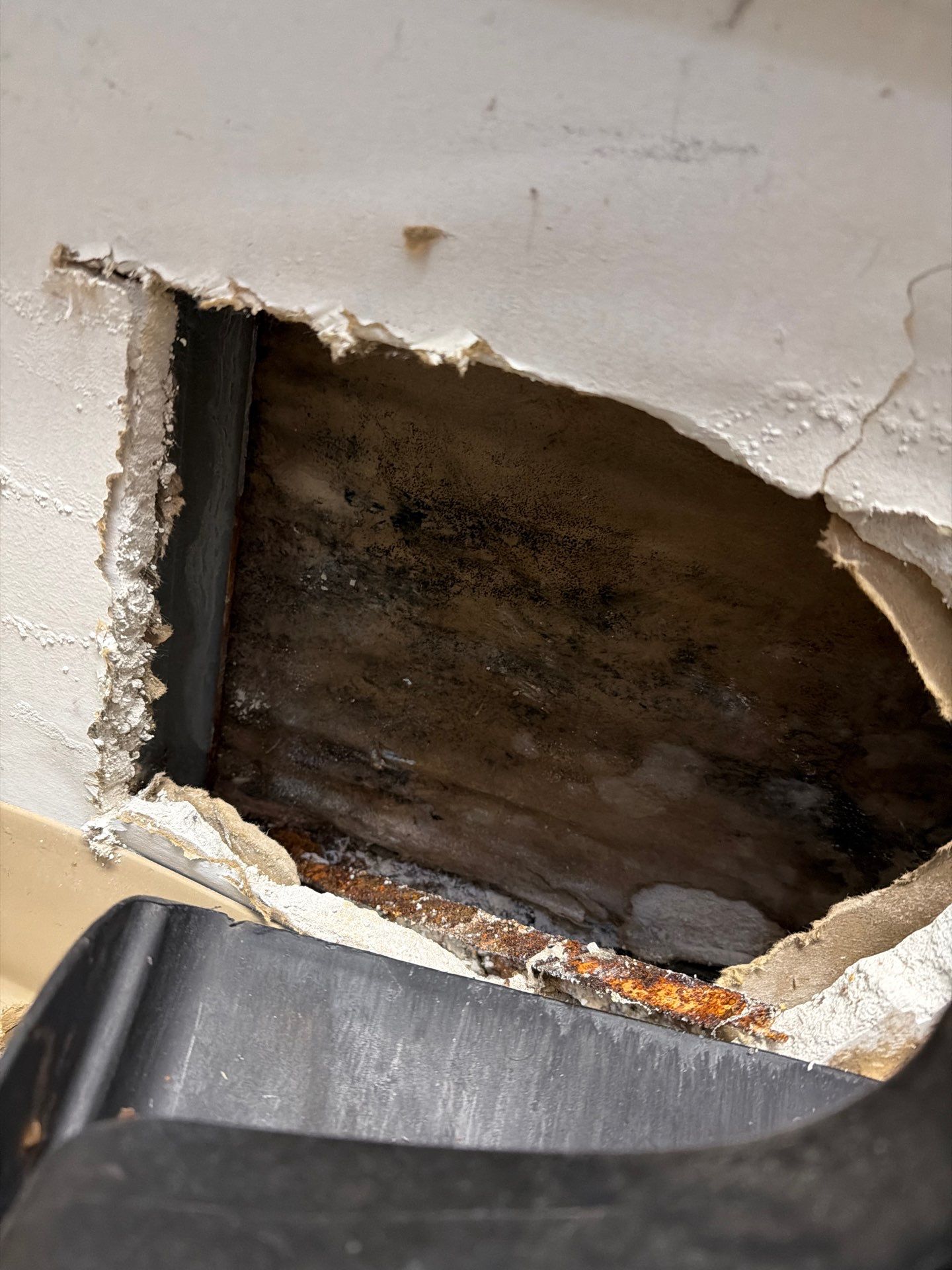
We pulled the drywall before it collapsed on her dining table, set up containment, and ran moisture mapping across the joists. The trusses read 28% moisture content. Anything above 16% in framing lumber is a drying target. By Monday morning, with three air movers and a commercial dehumidifier running, we had the cavity down to 12%. Total mitigation cost on that job ran $2,180, fully covered by her HO3 policy minus a $1,000 deductible.
Why The Condensate Line Fails In The First Place
Your AC pulls humidity out of the air, and that moisture has to go somewhere. The condensate drain line, usually a 3/4 inch PVC pipe, carries it to a floor drain, utility sink, or outside the house. Three things go wrong in Fountain City homes, and we see all three weekly:
- Algae and biofilm build up inside the line, especially in humid Indiana summers, until flow stops completely
- The drain pan rusts through on older units (we saw this on a 17 year old system in a Carmel ranch last August)
- The line was pitched wrong during install, so water pools instead of draining
A Fountain City couple in a 1990s two-story called us last summer after noticing a coffee colored stain spreading across their kitchen ceiling. The air handler was in a closet on the second floor, and the line ran horizontally through the joist bay with almost no slope. Water had been backing up for weeks before it found a path through the drywall. We documented the source, dried the ceiling cavity, and referred them to an HVAC contractor to repitch the line. The combined cost of our work and the HVAC fix landed near $3,400, with the restoration portion submitted directly to their carrier.
Simple Habits That Prevent The Next Leak
One Zionsville client we worked with two summers ago has not called us back since, and that is because she committed to a quarterly maintenance habit we walked her through after the cleanup. Pour a cup of distilled white vinegar down the condensate access tee every three months during cooling season. It kills the algae before it can colonize the line. Add a $40 float switch if your system does not have one. That single device would have shut off the unit before her 18 gallons ever escaped the pan. Check the secondary drain outlet on the exterior of the house in July. If you see water dripping there, your primary line is already failing and you have maybe a week before drywall starts staining.
Insurance, Cost, and What To Expect
Most HO3 policies in Fountain City cover sudden and accidental AC leaks. They do not cover long-term seepage, which is why documentation matters from the first hour. We photograph everything, log moisture readings twice daily, and submit a Xactimate-formatted estimate your adjuster can process without back and forth. Typical AC leak mitigation in Fountain City runs $1,500 to $4,500 depending on how far the water traveled and how long it sat. One Noblesville client had her claim approved in 72 hours because our file gave the adjuster zero reason to push back.
Hidden Damage You Will Not See From Below
The ceiling is the obvious victim, but condensate leaks travel. A Greenwood homeowner called us about a small kitchen ceiling stain and we ended up finding 22 linear feet of wet top plate, soaked blown-in insulation across half the attic, and the beginning of microbial growth on a rafter. Total job ran $5,600 instead of the $1,400 she expected. That is why we always inspect the source area, not just the visible damage. If you want the longer version of how hidden moisture gets traced, our writeup on water damage behind walls and hidden leak detection covers our process.
The Ceiling Damage Question Everyone Asks
A Fountain City Hampton Drive Area homeowner asked us last month whether her ceiling could be saved. The drywall had a soft spot the size of a dinner plate and a faint ring stain. Our moisture meter read 34% at the center. That ceiling was coming down, and we were honest with her about it. Sagging drywall above a kitchen island is a safety issue, not a cosmetic one. We walked her through the full process in language her adjuster would recognize, similar to what we cover in our breakdown on ceiling water damage leak repair and restoration.
If your ceiling is only stained and the moisture reading is under 16%, you may be looking at a stain block primer and repaint. If it is bulging, soft, or cracked, plan on removal and replacement. We will tell you which one you are facing before we start.
What We Actually Do On An AC Leak Call
When you call Fountain City Water Restoration, the first thing we ask is whether the unit is still running. If it is, shut it off at the thermostat. That alone can stop another 1 to 2 gallons per hour from joining the mess. Then we drive. Our average response time across Fountain City is under 60 minutes for emergency calls.
On site, we scope the damage with thermal imaging and pinless moisture meters before anything gets torn out. One Fishers homeowner was convinced his entire ceiling needed to come down. Our reading showed the wet zone was confined to a 4 by 6 foot section near the supply plenum. We made a controlled cut, dried the cavity in place, and saved him roughly $1,800 in unnecessary drywall replacement. That kind of restraint matters, and it is why we walk through the scope with you before the saw comes out.
From there, the work follows IICRC S500 standards. Because condensate water is Category 2, any porous material that stayed wet longer than 48 hours typically gets removed. Insulation almost always goes. Drywall depends on saturation and how fast we got there. For deeper context on grey water protocols, our team follows the same approach outlined in our guide to grey water damage Category 2 cleanup.